Two ways it goes in,
one machine
The system does the same four things either way. What changes is how it gets into your home: plumbed into the building if you own it, or rolled through the door if you rent.
Mini split
Three pieces, plumbed in. An indoor head, the thermal store beside it and an outdoor unit on the wall or the balcony. A contractor installs it and it stays with the building.
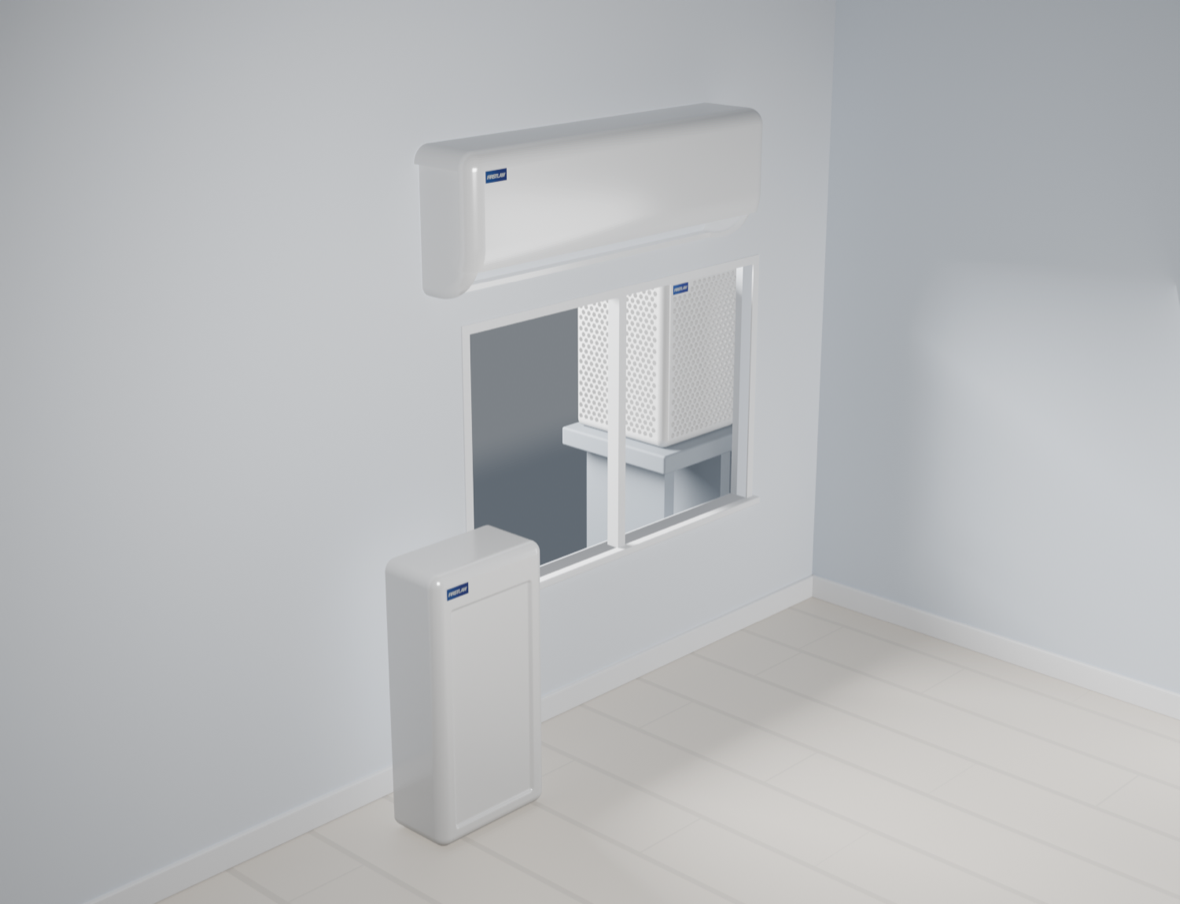
Portable
Two pieces, no installation. The machine rolls in on castors and vents through a window with two hoses, and the same thermal store stands beside it. Nothing is cut, drilled or plumbed, and it leaves when you do.
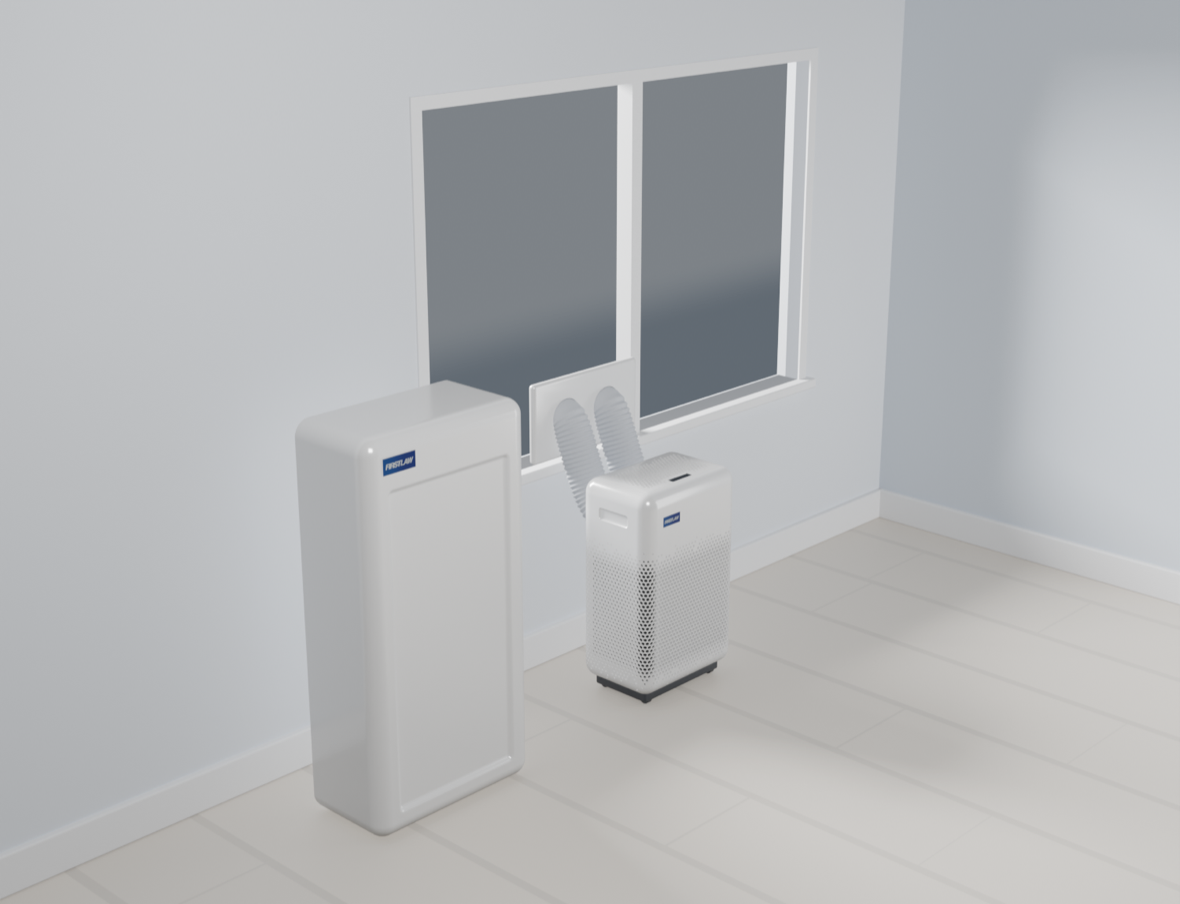
What both have in common
The same thermal store
The battery does not move inside the machine in either configuration. It stands next to it, and it is what lets the system make heat when power is cheap and spend it when it is not.
The same four modes
Heating, cooling, hot water and recovering waste heat. The app names whichever one is running and shows where the heat is going.
The same app
You tell it once which system you have and every screen after that is identical, because every number means the same thing.
The mini split is the system we have built and are testing. The portable is a concept in design: it is not for sale and there is no date for it. Both are renders of the same room, not photographs of an installation.